Each year, thousands of travellers, students and expats learn German in Vienna. Some travellers just want an hour of key phrases over a Melange in a traditional coffeehouse. Students and expats are usually after in-depth courses, an exam certificate or the German they need for work and paperwork.
As a Viennese and a linguist by education, I have listed the best schools, private teachers and budget options to kick-start your search: from a one-hour lesson in a café to university summer courses and exam preparation. And because the Viennese don’t always speak textbook German, you’ll also find a short primer on Austrian German and Wienerisch, our local dialect.
Planning a longer stay? Read why Vienna keeps topping the rankings as the best place to live and compare the Vienna districts before you pick a school near home.
Quick Pick: Which German Course in Vienna Suits You?
| You are… | Best Fit | Typical Format | Guide Price |
| A traveller with a few days | Private teacher (Teacher Finder) | 1 -2 hours in a café or online | fixed hourly rate |
| A busy professional who needs results fast | Berlitz Total Immersion | Full days, one-to-one, 1–6 weeks | on request |
| A student or expat on a budget | DeutschAkademie Intensive | 3 hours a day, 4 weeks, max. 12 people | from EUR 419 per 4 weeks |
| Someone who wants a university certificate | University of Vienna Language Centre | Summer and semester intensives, ECTS credits | EUR 665 for the July intensive |
| A resident studying alongside work | Volkshochschule (VHS) | Evening courses over 6–10 weeks | Around EUR 450 – 470 for B1 |
| A newcomer after immersion and culture | Actilingua Academy | Mornings plus mini-groups and cultural programme | on request |
1. Teacher Finder

To learn German at your own pace, handpick your teacher and your schedule. Culture travellers will not need the same “treatment” as university students – and studying with a teacher who shares your interests is simply more fun.
Teacher Finder matches you with a qualified local teacher after one short form, usually within 48 hours. You meet wherever suits you both: your flat, the teacher’s home, or a quiet corner of a Wiener Kaffeehaus. Online lessons by video call work just as well. All teachers charge the same fixed hourly rate, you pay the teacher directly, and there is no contract – so you can try a lesson or two and see.
My tip: ask your teacher to hold one lesson at a market or a Viennese sausage stand. Ordering a Käsekrainer in German teaches you more than a page of grammar.
2. IPSA Private Lessons
IPSA, a consortium of universities, colleges and language schools, offers one-to-one German lessons on their own or as a top-up to its intensive group course. Your teacher studies what you want, when you want: grammar, pronunciation, conversation or business German. Visit the IPSA website for current dates and fees.
3. Berlitz Total Immersion: The Ferrari of Private Courses
Berlitz’s Total Immersion one-to-one course is one of the fastest ways to learn German in Vienna. You spend full days with your teachers – lunch included – thinking, listening and speaking German for one to six weeks. The Berlitz Method gets you talking from the very first lesson, with no repetitive grammar drill.
It is the priciest option on this page, but for a manager about to start a job in Vienna it can be worth every cent. Berlitz also offers lighter, part-day immersion and prepares students for the Austrian ÖSD exams. Visit Berlitz Vienna.
Best Group Courses To Learn German In Vienna
Group courses are the best value if you’re staying a month or more – and you’ll make friends from all over the world.
1. Berlitz Group Courses
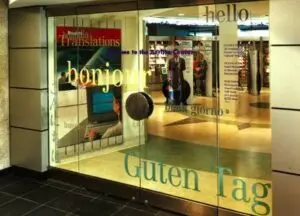
Berlitz is well known among professionals in Vienna. Its school on Mariahilfer Strasse is open Monday to Friday from 8am to 9.30pm and on Saturday mornings, so evening classes after work are easy. Groups are small and use the same speak-from-day-one method. Visit Berlitz Vienna. Berlitz is well known among professionals in Vienna. Its school on Mariahilfer Strasse is open Monday to Friday from 8am to 9.30pm and on Saturday mornings, so evening classes after work are easy.
Groups are small and use the same speak-from-day-one method. Visit Berlitz Vienna.
2. Actilingua Academy Intensive Course
Actilingua, at Reisnerstrasse 61 in the 3rd district, is a crash course in the fast lane. The intensive course packs 35 lessons a week: a standard course of four lessons a day, two extra lessons daily in a mini-group of five or six, and a cultural programme.
That programme is what I like most: guided city walks, talks on Austrian music and history, and even a Viennese Waltz lesson – handy if you’re in town for the Vienna ball season. Groups have 8 to 10 students (12 at most), the minimum age is 16, and beginners start once a month. Longer stays of 12 weeks or more are possible. See Actilingua.
3. DeutschAkademie Intensive Course (4 weeks)
Right opposite the Vienna State Opera at Opernring 1, DeutschAkademie runs intensive courses from A1 to C2, starting every month. You study three hours a day, Monday to Thursday, for four weeks, in groups of up to 12. Choose a morning, midday or afternoon slot. Prices start at €419 for four weeks, with discounts when you book several courses.
Residents of Vienna may qualify for a waff grant that covers a large part of the fee – ask the school. DeutschAkademie is also an ÖSD exam centre. Visit DeutschAkademie Vienna.
4. IPSA Intensive German Course
IPSA’s intensive course is aimed at international students, executives and diplomats. It runs on 20 lessons a week across seven levels, in classes of about 8 to 9 students, with a minimum age of 16. See the IPSA website.
Learn German at the University of Vienna
The Sprachenzentrum (Language Centre) of the University of Vienna has welcomed German learners for more than 100 years. Its summer intensives are a classic: the July 2026 course ran for four weeks, three teaching units every weekday morning, in groups of 10 to 16, at the old university campus in the 9th district. It cost €665, excluding books.
Pass the final exam and you earn 4 ECTS credits – useful if your home university will count them. Courses also run during the semester. See the Sprachenzentrum.
Budget and Free Ways to Learn German in Vienna
Unless you already speak five languages, learning how to learn and getting a head start before taking up a course will boost your progress. This page about learning a foreign language gathers valuable best practice from people who have successfully mastered a foreign language. For dedicated German language resources and tools check out the tips below.
Volkshochschulen (VHS)
Vienna’s adult education centres run German courses from A1 to C1 in almost every district, mostly in the evenings. They are well structured and good value: a B1 course over 7 to 10 weeks costs around €450–470. The VHS is also an official ÖSD exam centre. See VHS German courses.
The ÖIF Language Portal
The Austrian Integration Fund (ÖIF) offers free daily online German classes from A1 to B1, plus exercises, podcasts and practice tests, on its Sprachportal. It’s aimed at newcomers to Austria, but the materials help any learner.
More Free Options
Online communities let you learn German for free in exchange for helping others with your own language. I signed up to several to test them – read my review of learning German for free.
German Exams in Vienna: ÖSD, Goethe and Integration Tests
In Austria, the home-grown certificate is the ÖSD (Austrian German Language Diploma), recognised from A1 to C2 by universities and employers. Many schools on this page, including the VHS and DeutschAkademie, are ÖSD exam centres. Goethe and telc certificates are also widely accepted.
If you need German for a residence permit or citizenship, ask your authority which certificate it accepts. The ÖIF runs separate A2 and B1 integration exams for that purpose.
How to Practise German in Vienna Outside the Classroom
Classes give you the rules; Vienna gives you the practice. My favourite ways to use your German:
- Language exchanges (Tandem). Swap an hour of your English for an hour of German over coffee. Look for Vienna language cafés on Meetup, or use the University of Vienna’s Sprachlernbörse if you study there.
- Coffeehouses. Order, chat and read the German papers for free in a Viennese coffeehouse. Nobody will rush you.
- Theatre and cabaret. Start with musicals or the Volksoper, where the plot carries you. My guide to Vienna theatres has tips for German and non-German speakers.
- Cooking classes. Cook and speak with locals while you learn the names of everything on your plate.
- Walking tours in German. Once you reach B1, join one of the Vienna walking tours in German – guides speak clearly and the sights give you context.
- Markets and wine taverns. Haggle at the Naschmarkt or chat at a Heuriger in Vienna’s vineyards.
Austrian German: What Your Textbook Won’t Tell You
Austrian German is standard German with its own flavour, and the Viennese are proud of it. Learn these words early – you’ll meet them on every menu and in every shop.
| Austrian | German (Germany) | Englisch |
| Grüß Gott / Servus | Guten Tag / Hallo | Hello (formal / casual) |
| Jänner | Januar | January |
| Paradeiser | Tomate | Tomato |
| Erdäpfel | Kartoffeln | Potatoes |
| Marille | Aprikose | Apricot |
| Topfen | Quark | Curd cheese |
| Schlagobers | Schlagsahne | Whipped cream |
| Semmel | Brötchen | Bread roll |
| Sackerl | Tüte | Bag |
| Herr Ober | Herr Kellner | Waiter (formal) |
You’ll need most of these at the table – my guide to Austrian food puts them in context. Then there is Wienerisch, the city’s dialect.
Wienerisch
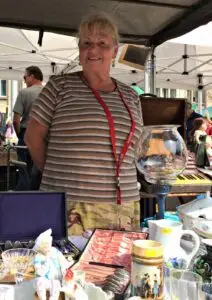
Just overhear a conversation at a Viennese sausage stand and you’ll get Viennese in full colour: peculiar, unique and full of interesting finds. Many Viennese still use it every day, and there are films, books and a whole song form in dialect, the Wienerlied.
My Wienerisch guide gives you a primer on its origins and essentials without getting too linguistic – plus tips on where in Vienna to hear the real thing.
Before You Go: Books and Software
Unless you already speak five languages, a head start before your course will boost your progress.
- Software. My husband reviewed quite a few programs when he decided to learn German. Read his views on German learning software, including Rosetta Stone German.
- Books. Being a linguist helped when reviewing textbooks about my own native language. See the best German books.
FAQ: Learning German in Vienna
How long does it take to learn German in Vienna? With a full-time intensive course, most learners move up one level (for example A1 to A2) in four to eight weeks. Reaching B1, enough for daily life, typically takes a few months of steady study.
How much does a German course in Vienna cost? Group intensives start at around €420 for four weeks; university summer courses cost about €665 a month; one-to-one immersion is the most expensive option.
Can I get by in Vienna without German? Yes, as a visitor – most Viennese in hotels, museums and restaurants speak good English. For living, renting and paperwork, German makes life much easier.
Is Austrian German different from German in Germany? The grammar is the same, but vocabulary and pronunciation differ, especially for food and greetings. Anyone who speaks German will understand you either way.
Which German exam is best in Austria? The ÖSD is the Austrian standard and widely recognised. For residence permits, check with your authority, as integration exams follow their own rules.
More Vienna Inspiration
- Explore more of What To Do In Vienna – must-see and do tips
- Plan your stay with my Vienna travel planning service
- Get monthly tips in my free Vienna Notes newsletter
- Go to Visit Vienna – free Vienna vacation tools and tips
- Back to Vienna Tourism tips