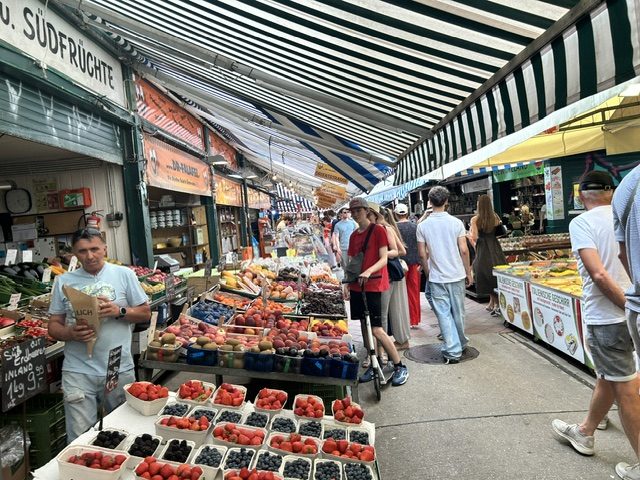
If you’ve heard of only one market in Vienna, it’s probably the Naschmarkt.
Stretching for around 1.5 kilometres between Karlsplatz and Kettenbrückengasse, the market has been supplying Vienna with fresh produce for more than 200 years. Today it’s a mixture of traditional market stalls, specialist food shops, cafés and restaurants, attracting local residents, chefs and visitors in roughly equal measure.
While many people come here for lunch or to browse the market stalls, the Naschmarkt is also closely linked with Vienna’s architectural history. Along one side of the market stand some of Otto Wagner’s finest Art Nouveau apartment buildings, while a recently opened public roof terrace offers a completely new perspective of both the market and these architectural landmarks.
Whether you’re looking for local produce, international food, antiques or architecture, the Naschmarkt rewards taking your time.
How Did The Naschmarkt Get Its Name?
There are several explanations, although nobody knows for certain which is correct.
One theory traces the name back to Aschenmarkt (Ash Market), referring to the milk bottles that were once cleaned with wood ash before being sold here. Another suggests the name comes from the Bavarian word naschen, meaning “to nibble” or “to snack”, which certainly seems appropriate today.
Whatever its true origin, the name has remained synonymous with Vienna’s best-known market for generations.
A Brief History Of The Naschmarkt
The market dates back to the late 18th century when fruit, vegetables and dairy products began to be sold along the banks of the Wien River.
At the time, the river still flowed in the open. It wasn’t until the end of the 19th century that it was covered over as part of Otto Wagner’s ambitious redesign of Vienna’s transport infrastructure and the construction of the Stadtbahn railway.
As Vienna expanded, so did the market. Traders arrived from across the Habsburg Empire, bringing produce, spices and culinary traditions that reflected the city’s growing diversity.
Today’s Naschmarkt continues that tradition. You’ll hear several languages being spoken as you walk through the market, while the range of food reflects influences from Austria, Italy, Turkey, the Balkans, the Middle East and Asia.
What To Find At Naschmarkt
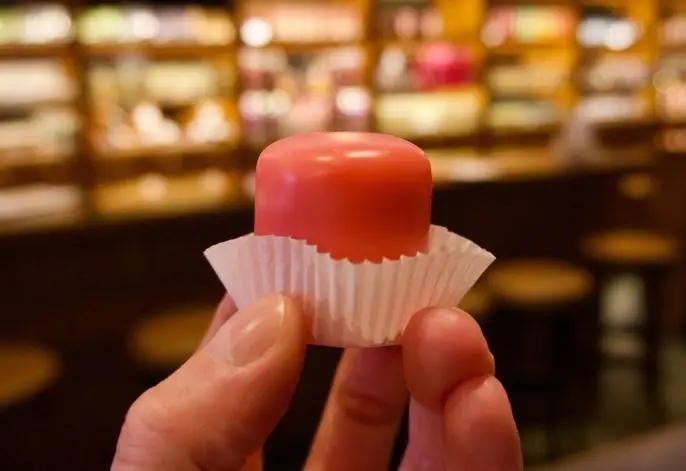
The Naschmarkt is less about ticking off famous stalls than wandering and seeing what catches your eye. You’ll find seasonal fruit and vegetables, artisan cheeses, freshly baked bread, cured meats, olives, herbs, spices, seafood, chocolates and specialist delicatessen products that can be difficult to find elsewhere in Vienna.
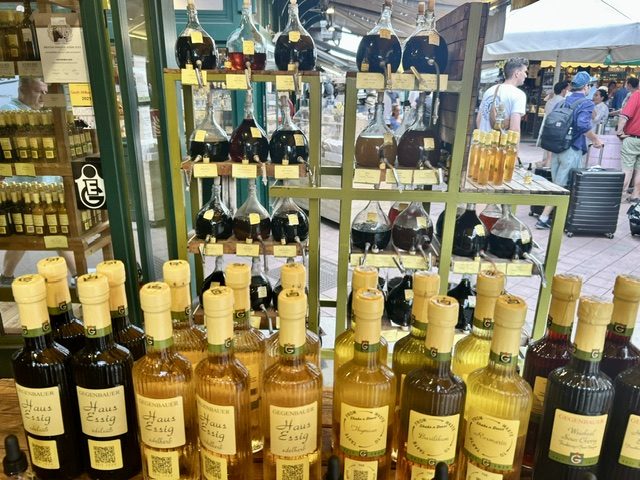
Tip: For Austrian regional delicacies like oil and vinegar, bread, wine and chocolate, head for the stalls of Gegenbauer, Pöhl, Urbanek and Zotter.
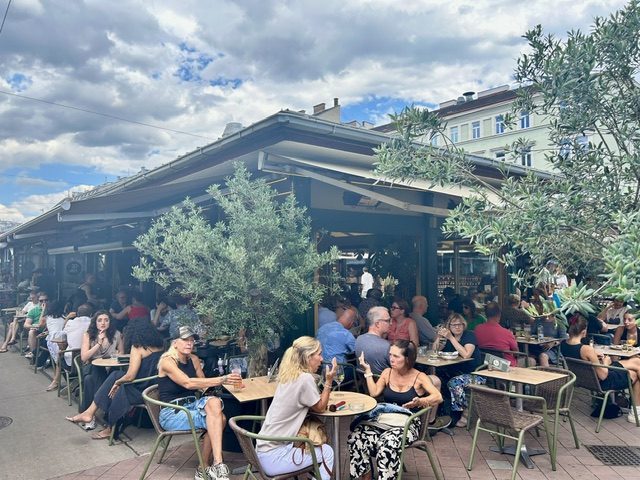
Alongside the market stalls are restaurants serving everything from traditional Austrian dishes to Middle Eastern, Japanese, Indian and Mediterranean cuisine. Some have become institutions in their own right, while others change over the years as new owners and food trends arrive. To join a small group and a brilliant hobby chef and guide across Naschmarkt, check out this small group Naschmarkt food tour.
While Naschmarkt is a good start to explore Viennese food the full picture emerges once you bite into a Leberkässemmerl and stick your fork into a multilayered Esterhazy cake. To visit the best places in one afternoon, starting from Naschmarkt, get in touch to learn more about a private tour guide with an appetite for foodie travelers.
The Saturday Flea Market
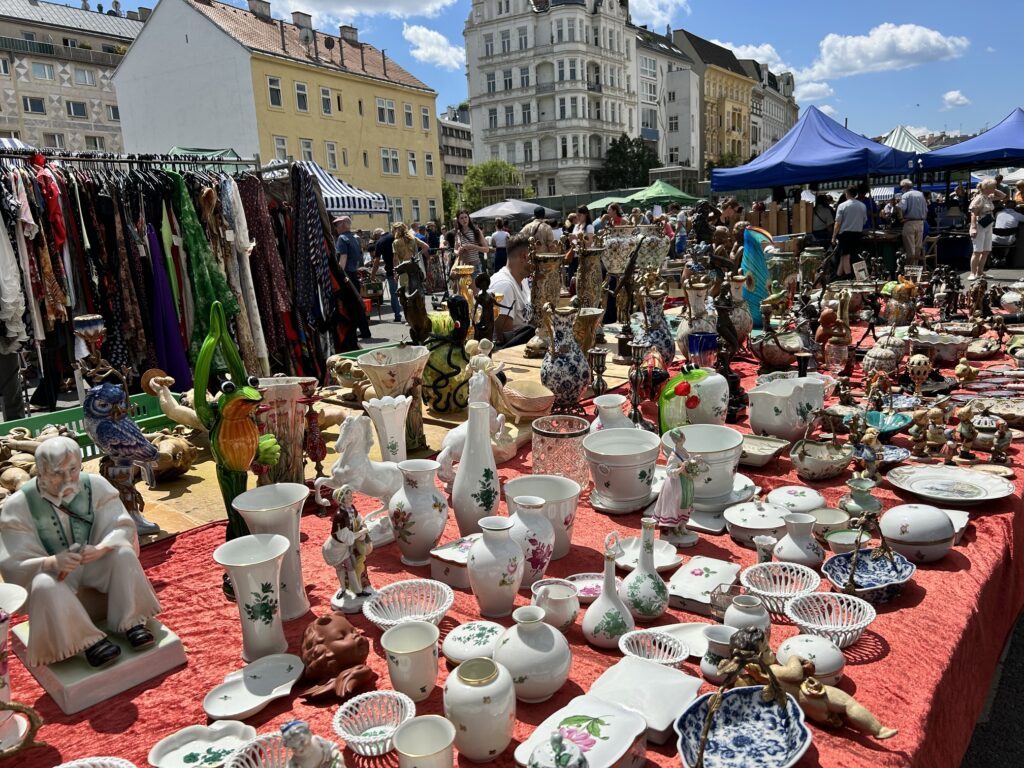
On Saturday mornings the area beside the Naschmarkt fills with the city’s best-known flea market. Collectors arrive early hoping to spot antiques, vintage glassware, old maps, vinyl records, cameras, books and the occasional piece of Viennese history before anyone else does.
Not everything is an antique, and part of the appeal lies in never quite knowing what you’ll find. One week it might be a box of old theatre programmes, the next an original Secession-era print or a collection of coffee house china.
Even if you leave empty-handed, it’s an enjoyable way to spend an hour before exploring the food market.
If you want to try Eastern European food, go for the Turkish lamb sausages, the spices, and baklava and other sweets from the Near East.
The New Marktraum And Rooftop Terrace
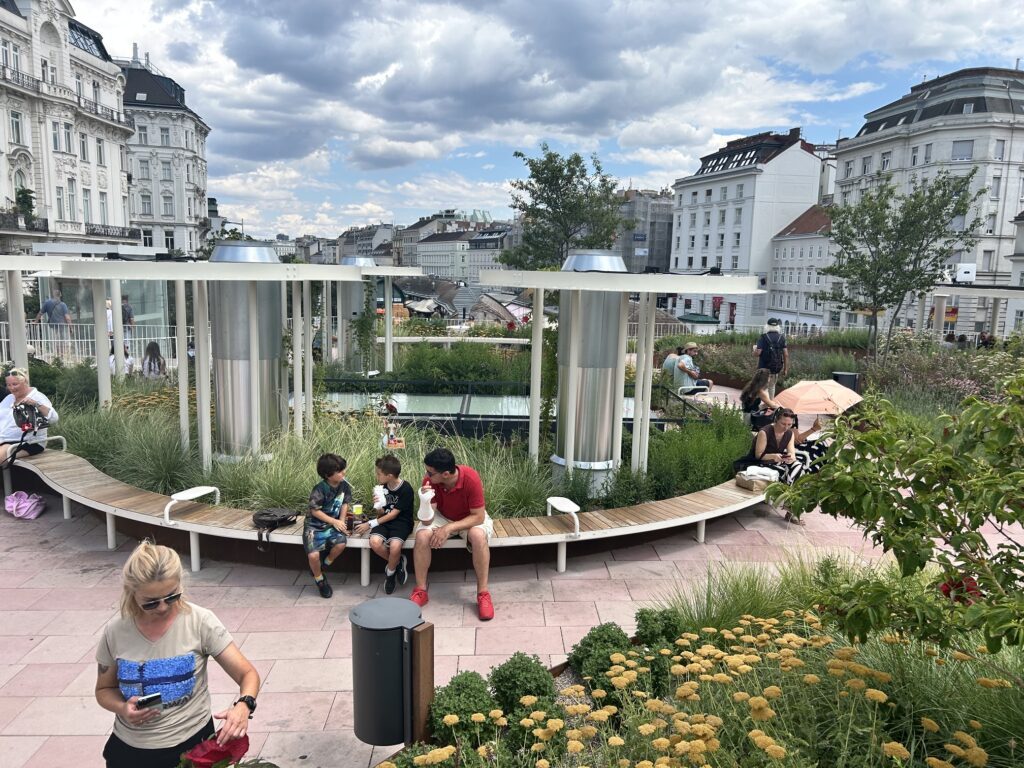
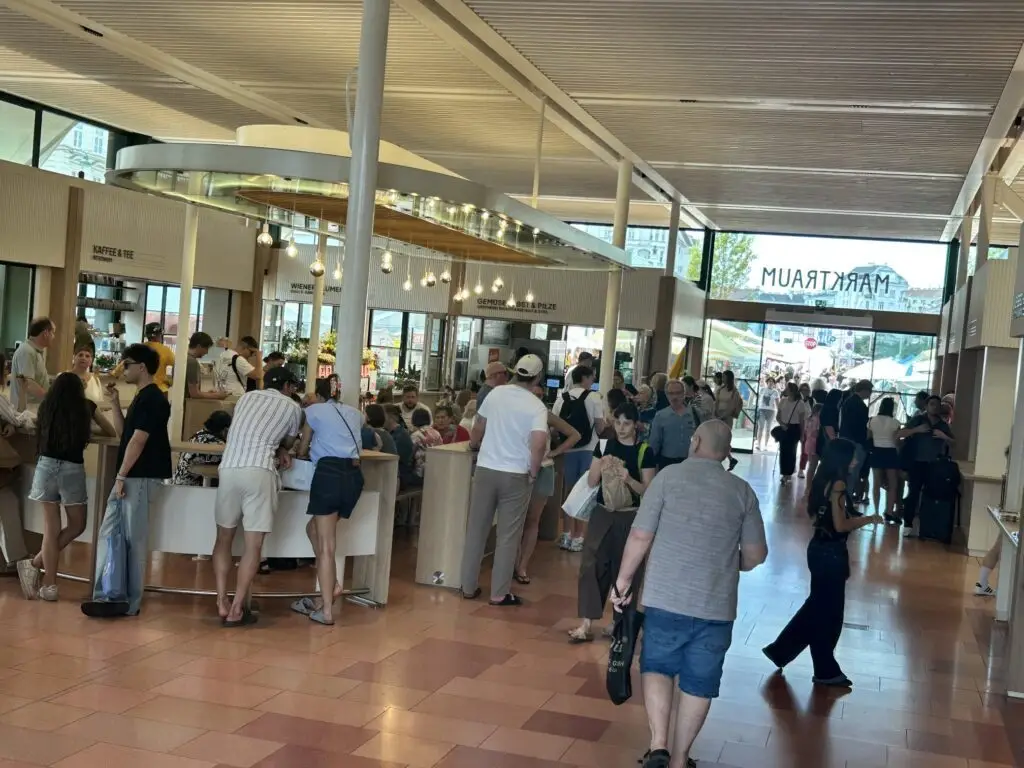
One of the biggest recent changes at the Naschmarkt is the opening of the Marktraum, a modern visitor and community space at the western end of the market.
Above it is a public roof terrace that has quickly become the best viewpoint overlooking the market: Looking east, the rows of market stalls stretch almost as far as Karlsplatz. From above, it’s much easier to appreciate the scale of the Naschmarkt and how it sits above the former course of the Wien River.
The terrace is free to visit and is usually much quieter than the market below, making it a pleasant place to take a break before continuing your walk.
Otto Wagner’s Art Nouveau Buildings At Linke Wienzeile
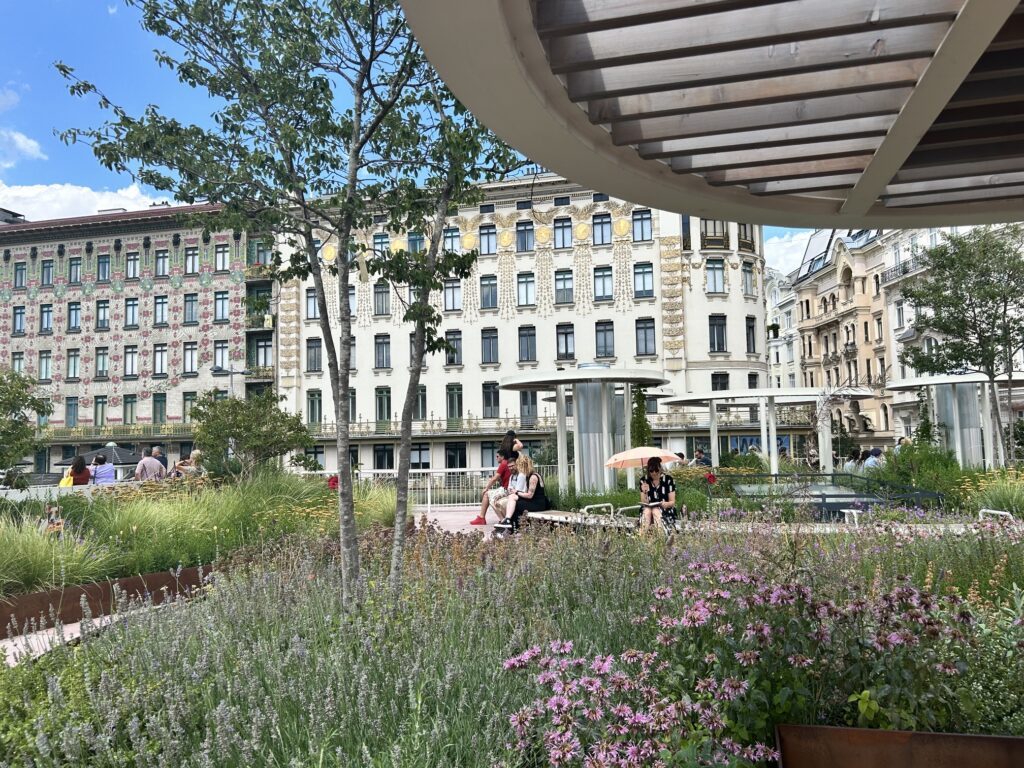
For architecture enthusiasts, the roof terrace offers another reason to visit. Directly opposite stand Otto Wagner‘s famous apartment buildings on Linke Wienzeile, among the finest surviving examples of Viennese Art Nouveau.
The most recognisable is the Majolikahaus (Linke Wienzeile 40), completed in 1899. Its façade is covered with glazed ceramic tiles decorated with colourful floral patterns, giving the building its name. Wagner chose majolica tiles not only for their decorative qualities but also because they were durable and easy to clean — an important consideration in a city where soot from coal fires quickly blackened traditional façades.
Next door stands the house at Linke Wienzeile 38, often referred to as the House of Medallions because of the gilded decorative medallions created by Koloman Moser. Together the two buildings demonstrate the close relationship between architecture and the Viennese Secession movement at the turn of the twentieth century.
From street level, it’s easy to admire the façades. From the roof terrace, however, you can appreciate how Wagner designed the buildings as part of a wider urban landscape, facing what was then one of Vienna’s busiest commercial areas.
If you’re interested in Otto Wagner’s work, continue your walk towards Karlsplatz to visit the nearby Secession Building and the beautifully restored Stadtbahn Pavilions.
Practical Information
Address: Wienzeile, 1060 Vienna
Nearest Underground stations
-
- Kettenbrückengasse (U4)
-
- Karlsplatz (U1, U2 and U4)
Opening hours
The market generally opens Monday to Saturday. Individual stalls and restaurants keep their own opening hours, while the flea market takes place every Saturday.
Discover Vienna Through Food And Wine