
If friends ask me what Vienna is known for, I usually pause for a moment. Not because there isn’t an answer — but because there are many.
Most visitors associate Vienna with classical music, imperial palaces, coffeehouses and cakes. All true. But the city’s reputation comes from something deeper: centuries of culture layered on top of each other in ways you still experience today.
You can hear Mozart in a concert hall one evening, walk through a Habsburg palace the next morning, and spend the afternoon lingering in a café that hasn’t changed much since Freud or Trotsky once sat there.
Here are some of the things Vienna is famous for — and why they still matter today.
Vienna and Classical Music
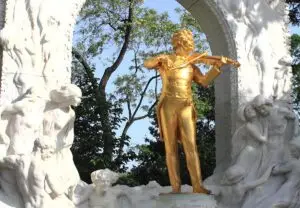
What is Vienna Known For? Few cities are as closely associated with music as Vienna. Some of the greatest composers in Western music lived here at some point:
- Mozart
- Beethoven
- Haydn
- Schubert
- Johann Strauss
They shaped Vienna’s identity as the world capital of classical music. Even today the tradition continues. The Vienna Philharmonic Orchestra, the Vienna State Opera, and venues like the Musikverein attract audiences from across the globe. And then there’s the New Year’s Concert, broadcast to millions every January — a reminder that Vienna still sees music as part of everyday life.
Imperial Vienna: The Legacy of the Habsburgs

What is Vienna Known For? For more than six centuries Vienna served as the centre of the Habsburg Empire.
That legacy still shapes the city’s skyline.Visitors inevitably encounter some of Vienna’s most famous landmarks:
- Schönbrunn Palace, the Habsburgs’ summer residence
- Hofburg Palace, the former imperial winter residence
- Belvedere Palace, now home to one of Austria’s greatest art collections
Walking through these buildings makes it easy to understand why Vienna once sat at the heart of European politics.
Vienna’s Coffeehouse Culture

What is Vienna Known For? Vienna’s coffeehouses are more than cafés. They’re institutions. The traditional Viennese coffeehouse offers something increasingly rare in modern cities: time. Waiters rarely hurry you. Newspapers are provided. And ordering a single coffee can comfortably stretch into an entire afternoon.
Classic coffeehouse places like Café Central, Café Landtmann, or Café Sperl have welcomed writers, politicians and artists for generations.
It’s no surprise that Vienna coffeehouse culture is recognised by UNESCO as intangible cultural heritage.
Vienna’s Famous Cakes And Desserts

What is Vienna Known For? Coffee in Vienna almost always comes with something sweet. The city’s dessert tradition is legendary. The most famous example is the Sachertorte, a chocolate cake layered with apricot jam and covered in dark icing. But that’s just the beginning.
Vienna is also known for:
- Apfelstrudel
- Kaiserschmarrn
- Topfenstrudel
- Imperial Torte
For anyone with a sweet tooth, Vienna might be one of Europe’s most dangerous cities. Finally Viennese coffee has been shaping life here for centuries. In Vienna coffeehouses you will find up to 40 different coffee specialities! You can download this poster of Cafe Landtmann coffee specialities for free.
Vienna’s Museums and Art Collections

Vienna’s museums reflect the city’s long history as an imperial capital. The Kunsthistorisches Museum houses masterpieces collected by the Habsburgs. The Belvedere Museum is home to Gustav Klimt’s famous painting The Kiss. Meanwhile the Albertina and the MuseumsQuartier show how Vienna continues to support both classical and contemporary art.
For art lovers, Vienna easily ranks among Europe’s most rewarding cities.
Waltzes, Ballrooms and Vienna’s Ball Season

Another thing Vienna is famous for — particularly in winter — is its ball season. Between January and February the city hosts hundreds of traditional balls. Many follow the same elegant rituals that date back to imperial times.
The Vienna Opera Ball is the most famous, but there are many others across the city. At midnight the orchestra often plays a familiar tune: The Fledermaus Quadrille.
And suddenly the ballroom fills with rows of ladies and gentlemen marching towards and away from each other, dancing the historic quadrille.
Vienna’s Architecture and Historic Centre
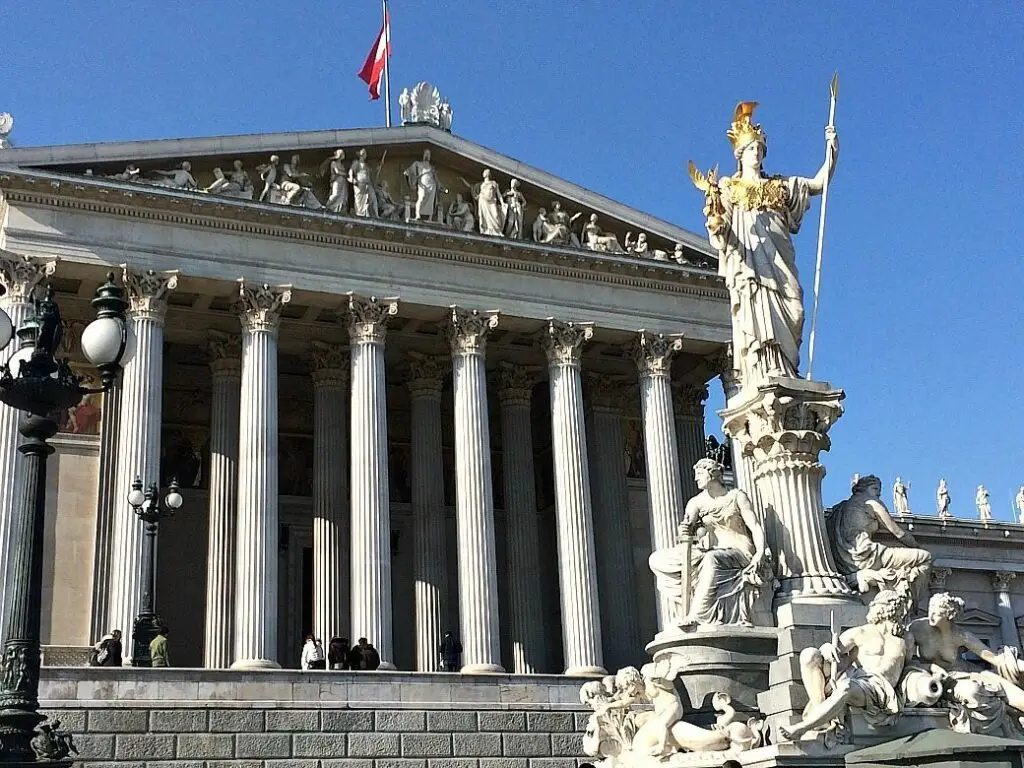
Unmistakably, Vienna’s historic centre is a UNESCO World Heritage Site, and it’s easy to see why. From Kärtner Strasse to Schwedenplatz you can stroll from 19th century and neogothic to baroque and Medieval structures in 30 minutes.
A walk along the Ringstrasse boulevard reveals some of the city’s most impressive buildings:
- the Vienna State Opera
- the Austrian Parliament
- Vienna City Hall (Rathaus)
- the Burgtheater
At the heart of it all stands St. Stephen’s Cathedral, whose colourful tiled roof has become one of Vienna’s defining symbols.
A City Known for Quality of Life
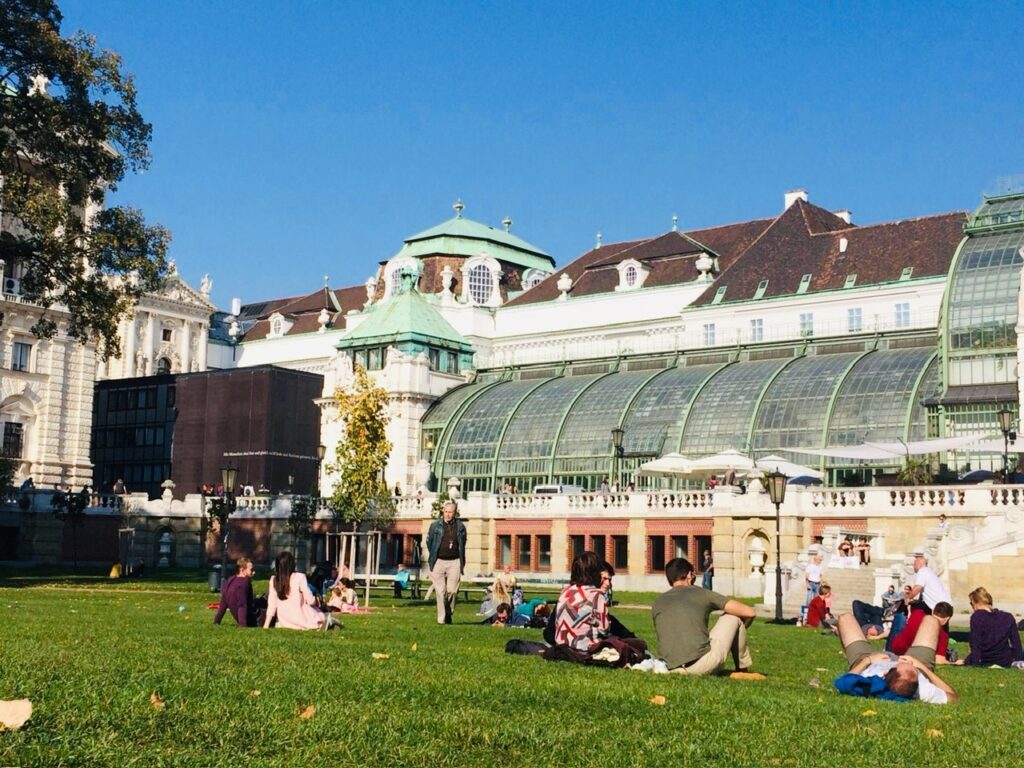
Almost every single year, Vienna tops global rankings for quality of life. Visitors quickly notice why.
Without boasting, public transport is efficient, parks are abundant, and the city manages to feel both lively and relaxed at the same time.
Nearly half of Vienna’s area consists of green space, from the vast Prater park to the nearby Vienna Woods.
For many people, Vienna combines the advantages of a major capital with the comfort of a much smaller city.
Vienna Wine and Heurige Taverns
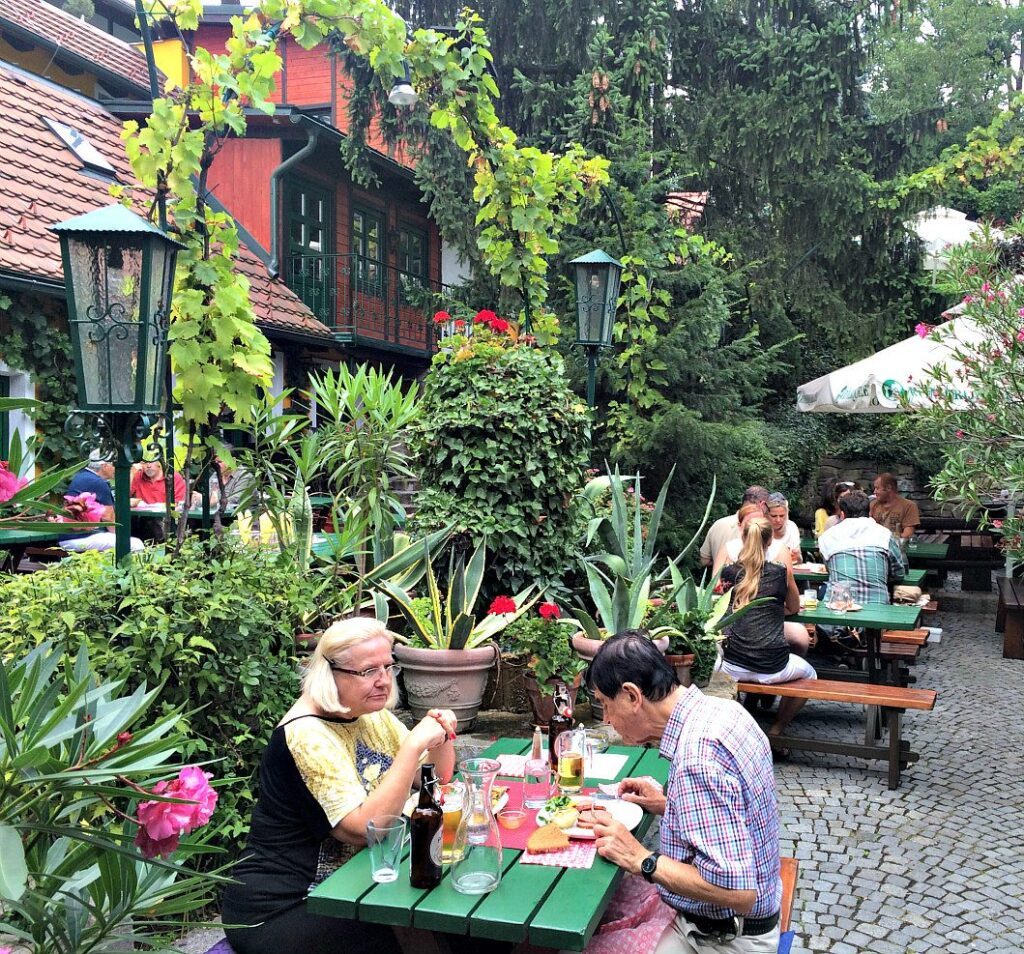
Few capital cities produce their own wine — but Vienna does.
The hills on the edge of the city are covered with vineyards, and local Heuriger wine taverns serve the new vintage each year.
In neighbourhoods like Grinzing or Neustift am Walde, you can still experience the relaxed tradition of drinking local wine with simple Austrian food.
Christmas Markets In Vienna

If you visit Vienna in December, the city feels almost theatrical.
Historic squares transform into Christmas markets, filled with wooden stalls, festive lights and the scent of mulled wine.
In my view, the markets at Rathausplatz, Schönbrunn Palace, and Belvedere Palace are among the most beautiful in Europe.
So What Is Vienna Most Famous For?
If there’s one answer, it might simply be this: A sense to cultivate the good things in life over centuries.
Vienna is known for combining culture, history and everyday life in a way few cities manage.
Music, coffeehouses, imperial palaces, museums, wine taverns and elegant architecture all exist side by side.
And once you’ve experienced Vienna, it’s easy to understand why so many visitors return.
find out What To Do In Vienna – Must See And Do Tips
go to Visit Vienna – 20 Free Vienna Vacation Tools and Travel Tips
explore a Map of Vienna – City Maps of Landmarks, Hotels, Transport, Free Wifi and More
go to Vienna Travel Planning – Trip Planning and Travel Consulting by Vienna Unwrapped
find more Vienna Tourism Tips – 16 Essentials To Know
back to Vienna Unwrapped homepage


