Vienna has a different character in winter. The days are shorter, the air can be crisp and cold, and the city’s grand streets and historic buildings take on a quieter atmosphere. But winter is also a season of distinctive Viennese traditions: elegant balls, outdoor ice skating, festive markets, traditional winter food and the rather more frightening appearance of Krampus.
From the lively atmosphere around the Prater’s Winter Market to an evening grilling around an open fire at the Donaukanal, there are plenty of ways to enjoy Vienna beyond its famous museums and concert halls.
Whether you are planning a festive city break or simply want to experience Vienna during the colder months, here are some of the seasonal experiences that make winter in the Austrian capital special.
1. Experience Vienna’s famous ball season

One of the most distinctive reasons to visit Vienna in winter is its traditional ball season.
From November through to the period before Lent, the city hosts hundreds of balls in historic palaces, concert halls, hotels and other grand venues. The season reaches its height in January and February, when the Viennese waltz becomes part of the city’s social calendar.
The most famous event is the Vienna Opera Ball, held at the State Opera. It attracts international attention, but there are many other balls, each with its own character and traditions.
The Coffee House Owners’ Ball, the Philharmonic Ball and the Confectioners’ Ball are among the better-known events. Some are grand society occasions, while others offer a more approachable introduction to the tradition.
You don’t have to be an accomplished dancer to attend. Many visitors come to enjoy the atmosphere, the formal dress, the music and the experience of seeing Vienna’s historic venues transformed for the evening.
If you are considering attending a ball, plan ahead. Tickets for popular events can sell out, and dress codes are usually formal. Some balls also offer dance lessons or introductory events for those who would like to learn the Viennese waltz.
For more information, see my guide to Vienna’s traditional balls.
2. Discover the local Krampus tradition
 Winter in Vienna has a darker and more mischievous side, too. In early December, the traditional Alpine figure of Krampus makes an appearance in Vienna and the surrounding region.
In Austrian folklore, Krampus is the fearsome companion of St Nicholas. While St Nicholas rewards well-behaved children with sweets and small gifts, Krampus traditionally represents the opposite: a horned, devil-like figure who frightens naughty children. His appearance is quite a contrast to Vienna’s elegant Christmas markets and imperial architecture.
The tradition is celebrated through Krampusläufe, or Krampus runs. Groups of performers dress in elaborate costumes, wearing frightening hand-carved wooden masks, shaggy animal skins and heavy bells. They parade through streets and public squares, sometimes accompanied by fire effects and loud, rhythmic bell ringing.
You may also encounter Perchten, another type of Alpine folklore figure associated with winter rituals and the turning of the year. Although the two traditions are related, Krampus is particularly connected with St Nicholas Day, while Perchten have a broader association with winter folklore.
Vienna’s events tend to be organised public spectacles, while some of the more intense traditional celebrations take place in smaller towns and Alpine regions.
If you would like to experience this unusual side of Austrian winter folklore, read my detailed guide to Krampus in Vienna: from Krampuslauf to Perchtenparade.
3. Discover Vienna’s seasonal illuminations and light shows
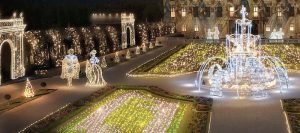 Winter brings some spectacular opportunities to experience Vienna after dark. At Schönbrunn Palace, Imperial Lights transforms parts of the palace gardens into an illuminated trail, with artistic installations inspired by the Baroque era. The 2026/27 season runs from 6 November 2026 to 6 January 2027, with daily admission from 4.30 pm. Allow around 60 to 90 minutes to explore the displays. Tickets and timed entry are required.
For a very different experience, visit the Votivkirche on the Ringstrasse for Light of Creation, an immersive light and sound show inside the church. Specially composed music accompanies spectacular projections across the Neo-Gothic architecture, taking visitors on a 30-minute visual journey inspired by the story of creation. Performances take place on selected evenings, with several showtimes on some dates. It is worth checking the schedule and booking tickets in advance.
Both offer a memorable way to see Vienna in a different light, whether you prefer an atmospheric walk through historic gardens or an indoor audiovisual experience.
4. Go ice skating in Vienna
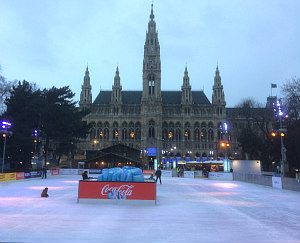 If you would like to spend some time outdoors, winter ice skating is a popular Viennese pastime.
The best-known seasonal attraction is the Wiener Eistraum, or Vienna Ice World, which transforms the area around City Hall into a large outdoor skating landscape. The ice paths extend through parts of the Rathauspark, creating an unusual opportunity to skate among the trees in the heart of the city.
There are also other skating venues around Vienna, including the traditional Wiener Eislaufverein near the Konzerthaus and the Engelmann artificial ice rink, which has been a Viennese winter institution for generations.
The exact opening dates and arrangements vary from year to year, so check the current season’s programme before planning your visit.
For locations, opening times and practical details, see my guide to ice skating in Vienna.
5. Enjoy the Prater’s Winter Market
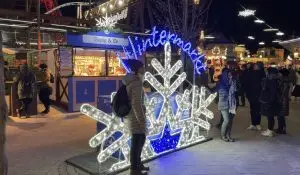 Vienna’s Prater is worth considering even during the colder months. While some of its amusement park attractions close for the winter, the area around the Giant Ferris Wheel takes on a festive atmosphere with the Winter Market at Riesenradplatz.
The market combines food and drink stalls, seasonal treats, entertainment and live music. You can enjoy a warming mug of punch or mulled wine, browse the stalls and take in the illuminated surroundings. Selected rides and attractions also operate during the winter season.
The 2026/27 Winter Market runs from 20 November 2026 to 6 January 2027, with free admission. Its programme includes live music from Wednesday to Sunday, alongside family entertainment and seasonal events.
The Prater’s famous Giant Ferris Wheel, the Wiener Riesenrad, also operates throughout the year, offering a panoramic view over Vienna. On a clear winter day, a ride can be a particularly enjoyable way to see the city from above.
For current programme details and opening times, visit the official Winter Market website.
6. Enjoy winter dining around an open fire at Feuerdorf
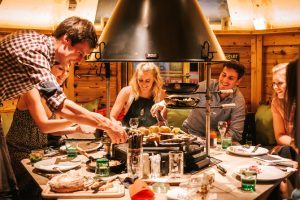
For a different kind of winter evening in Vienna, head to Feuerdorf, where you can combine a barbecue with the cosy atmosphere of a wooden alpine-style hut.
Located on the Danube Canal (Donaukanal), close to the historic city centre, Feuerdorf offers individual grill huts where you gather with friends or family around an open fire and prepare your own meal. The huts are equipped for all-weather use, making this an appealing alternative to a conventional restaurant on a cold winter evening for a group of min 6 guests.
You choose a barbecue menu, with the ingredients and accompaniments provided, and grill together at your own pace. It is a sociable experience, particularly suited to groups who enjoy a leisurely meal rather than a conventional restaurant setting.
There is also a seasonal activity: from October to March, Feuerdorf operates two artificial ice lanes for Eisstockschiessen, a traditional Alpine game similar to curling. You can book a game alongside your meal, or simply enjoy the atmosphere at the venue’s Salettl Bar.
Feuerdorf has developed beyond its original winter concept and now operates throughout the year, but the combination of open fires, wooden huts and winter games makes it particularly appealing during the colder season.
Check the current menus, opening times and reservations on the official Feuerdorf website.
7. Visit Vienna’s Christmas markets
 If you visit Vienna in late November or December, the Christmas markets are likely to be among the highlights of your stay.
The city’s squares and historic palaces host seasonal markets selling Christmas decorations, handmade gifts, traditional food and warming drinks. The market in front of City Hall is particularly well known, while Schönbrunn Palace, Belvedere Palace and the historic centre offer other atmospheric settings.
You can enjoy the markets in the early evening, when the lights illuminate the historic buildings and the stalls become a lively meeting place. Try a mug of Punsch or Glühwein (mulled wine), browse the traditional decorations and sample seasonal specialities.
However, Christmas markets are only one part of Vienna’s winter appeal. Once the festive markets have closed, the city continues to offer its ball season, outdoor activities and cultural programme.
For dates, locations and recommendations, see my separate Christmas market guide.
8. Enjoy Viennese winter food specialities
 One of the pleasures of winter in Vienna is sampling the seasonal food sold at Christmas markets and outdoor stalls. The aromas of roasting chestnuts, freshly fried potato pancakes and warm spices are part of the city’s festive atmosphere.
Look out for Maroni, hot roasted chestnuts sold from street stands. They are a classic Viennese winter snack, particularly welcome when you’re strolling through the city on a cold day.
Another favourite is Erdäpfelpuffer, crisp potato pancakes made from grated potatoes and fried until golden. Often served hot from the pan, they make a satisfying savoury snack. You will also find Langos, a Hungarian speciality of deep-fried dough, traditionally topped with garlic, sour cream and grated cheese.
For something sweet, try Lebkuchen, the spiced gingerbread associated with the Christmas season. Market stalls often sell it in decorative shapes, sometimes iced or wrapped as gifts.
To drink, warm yourself with a mug of Punsch or Glühwein (mulled wine). Punsch comes in various flavours, often combining fruit juice, spices and spirits, while Glühwein is traditionally made with heated red wine, sugar and winter spices. Both are served in decorative mugs, which you can often keep as a souvenir by paying a small deposit.
Winter dining in Vienna is not limited to market stalls, either. Meat fondue, although traditionally associated with Switzerland, is also popular in Vienna during the colder season.
9. Enjoy Vienna’s cultural life indoors
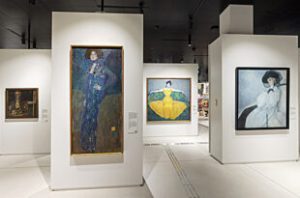 Winter is also an excellent time to explore Vienna’s cultural heritage. When the weather is cold or wet, the city’s museums, palaces, concert halls and coffee houses offer plenty of opportunities to enjoy the city indoors.
The Kunsthistorisches Museum is one of Europe’s outstanding art museums, with collections of Old Masters including works by Pieter Bruegel the Elder, Peter Paul Rubens and Rembrandt. The Belvedere Palace houses Gustav Klimt’s celebrated The Kiss, while Schönbrunn Palace and the Hofburg provide a glimpse into the world of the Habsburg emperors.
Vienna’s musical life is equally rewarding. You could attend an opera at the State Opera, enjoy a classical concert at the Musikverein or explore the operetta programme at the Volksoper Vienna.
And don’t overlook the traditional coffee houses. A leisurely afternoon over a Melange and a slice of Sachertorte is one of the simplest pleasures of a winter visit.
For more ideas, explore my guides to Vienna’s museums and Johann Strauss.
10. What is the weather like in Vienna in winter?
Vienna has a continental climate, with cold winters and noticeably shorter days than in summer.
From December to February, daytime temperatures are often around freezing to a few degrees above, while nights can be colder. January is usually the coldest month. Snow is possible, but it is not guaranteed, and prolonged snow cover in the city is less common than visitors sometimes imagine.
You may encounter crisp sunny days, grey skies, rain or occasional snowfall. It is best to prepare for variable conditions rather than expect a consistently snowy winter landscape.
The shorter daylight hours also influence how you plan your sightseeing. Make the most of the brighter part of the day for outdoor walks and winter activities, and leave museums, concerts and coffee houses for the afternoon and evening.
What should you wear in Vienna in winter?
If you are visiting Vienna between November and March, pack for cold and changeable weather.
I recommend bringing:
- A warm winter coat, preferably wind-resistant.
- Comfortable, weatherproof walking shoes or boots.
- Warm socks, gloves, a scarf and a hat.
- Layers that you can remove when entering heated museums, restaurants and shops.
- An umbrella or waterproof outer layer for wet days.
You don’t need specialist winter sports clothing for a city break, but warm footwear makes a considerable difference when you are sightseeing on foot.
11. Is Vienna worth visiting in winter?
Absolutely, provided you enjoy cultural sightseeing and don’t mind colder weather.
Winter is particularly appealing if you are interested in European art, imperial history, classical music, architecture and traditional café culture. The ball season adds another dimension to a winter visit, while December brings the Christmas markets and seasonal concerts. The Krampus tradition also offers an opportunity to experience a side of Austrian culture that many international visitors don’t initially expect.
There are trade-offs. Days are shorter, outdoor sightseeing is less comfortable in very cold or wet weather, and you won’t experience Vienna’s gardens and outdoor cafés at their summer best. But the city’s seasonal traditions and historic interiors provide plenty of alternatives.
For visitors who enjoy cultural experiences, traditional food and a lively winter atmosphere, Vienna can be a particularly rewarding destination.
Frequently asked questions about winter in Vienna
Is winter a good time to visit Vienna?
Yes, particularly if you enjoy museums, classical music, historic architecture and traditional coffee houses. Winter also brings the famous Viennese ball season, Christmas markets and distinctive local traditions such as Krampus. You will need to prepare for cold weather and shorter daylight hours, but there is plenty to enjoy.
Does it snow in Vienna in winter?
Snowfall is possible, but you should not plan a trip on the assumption that Vienna will be covered in snow. Some winters bring occasional snowfall, while others are relatively mild. The city’s seasonal attractions and cultural experiences are worth enjoying regardless of the weather.
What are the best things to do in Vienna in winter?
Some of the seasonal highlights include attending a Viennese ball, watching a Krampus procession, going ice skating, visiting the Prater’s Winter Market, enjoying an evening at Feuerdorf and exploring the Christmas markets. Vienna’s museums, opera houses and traditional coffee houses are also excellent options when the weather is cold.
Is Vienna very cold in winter?
Vienna can be cold, particularly in the middle of winter, when temperatures often hover around freezing. However, conditions vary. You may experience crisp sunny days as well as grey, damp weather. Warm clothing and comfortable shoes are essential.
How many days should I spend in Vienna in winter?
Three full days are a good starting point for a first visit. This gives you time to explore the historic centre, enjoy some seasonal activities, visit a museum or palace, and perhaps attend a concert or other cultural performance. Four or five days allow a more relaxed pace and time for additional excursions.
Are Vienna’s museums and palaces open in winter?
Yes. Vienna’s major museums and palace interiors operate throughout the winter, although opening days and hours vary. The gardens and outdoor attractions can be less appealing in cold weather, but the historic interiors and collections provide plenty to explore.
Plan your winter visit to Vienna
Winter in Vienna is about much more than Christmas markets. It is a season of elegant balls, unusual folklore, outdoor activities, traditional food and cosy evenings around an open fire.
For more detailed recommendations and current events, explore my month-by-month guides:
Things to do in Vienna in November
Things to do in Vienna in December
Things to do in Vienna in January
Things to do in Vienna in February
These guides cover current events, performances, exhibitions and seasonal activities, helping you plan your visit around the time of year you are travelling.