
What is there to see at Vienna’s Augarten? From fine Viennese porcelain in Europe’s second oldest porcelain manufactory to a manicured baroque garden and a World War II Air Defence Tower. These are just some of the local treasures that have been hiding from tourist swarms. Here are five things you can do there:
1. Stroll Through Oldest Baroque Garden
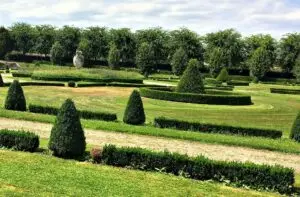 The park itself is Vienna’s oldest baroque garden and has landmark status. In the 17th century it was conceived as a hunting ground amidst the Danube flood plains. Augarten not only houses the Vienna Boys Choir but Europe’s second oldest porcelain manufactory. Other than that, expect an original World War II defence tower, a contemporary museum and a kindergarden. The park itself has the shape of a kite, patterned with large flower beds and geometric lawns lined by cubistic chestnut, acorn, and lime trees. Its formal design includes geometric parterres, clipped hedges, and ornamental plantings meticulously maintained by the Austrian Federal Gardens. The rear part features geometrical pathways that criss-cross through a more natural lime grove, blending baroque structure with wild nature.
Throughout Augarten you will find baroque layouts, allées, terraced green areas, trimmed hedges and the occasional ornamental flower beds. Nature largely owns the rear part of Augarten: Geometrical pathways criss-cross a savage lime grove. Further south, orchards and meadows link different park areas.
2. Visit Augarten Porcelain Manufactory
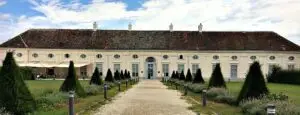 Founded in 1718, the Augarten Porcelain Manufactory is Europe’s second-oldest porcelain maker, where every piece is still handcrafted, molded, glazed, and painted by artisans using traditional techniques passed down for over 300 years. Tours reveal the meticulous three-month production process, with each piece handled by a single artist from start to finish, giving visitors newfound appreciation for the craftsmanship and artistry behind each creation. The manufactory’s designs span from baroque to modern, created in collaboration with renowned artists throughout history. This includes Josef Hoffmann’s famous 1929 melon service and the Biedermeier-era Viennese Rose decoration. Right next, the adjacent museum showcases over 25,000 products and features a two-story original brick kiln large enough to walk inside, illustrating how porcelain was fired at temperatures exceeding 1,000 degrees Celsius.
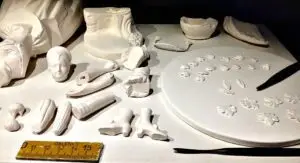 From Germany and Austria to Hungary, producing goods from fine china has defined Central European culture from the 18th century. In fact, most of Augarten’s historic moulds date from the times of Empress Maria Theresia and Empress Sissi. After almost 300 years the manufactory still fires our traditional Augarten coffee, tea and dinner sets. Especially at local luxury hotels you may eat and drink from Augarten porcelain. But also decorative items, from vases to delicate painted figurines, are still in fashion. For example, the Spanish Riding School sells porcelain Lipizzaner horses in graceful poses.
Today, Augarten porcelain manufactory is a boutique enterprise, with only 30 people mixing, moulding, casting, firing, glazing and painting porcelain. If you love fine European china the manufactory and museum will take you up close to traditional porcelain making. To watch the porcelain artists live I joined a guided tour through the manufactory. Among the highlights were watching an artist craft Lipizzaner figurines. With utter precision he glued minuscule porcelain pieces to a perfectly shaped porcelain torso.
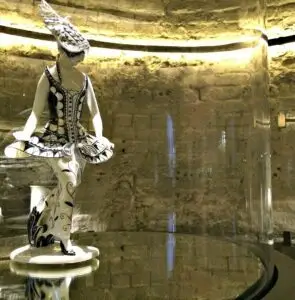 Other than that, an enormous Spanish bull received his hind legs in a delicate operation. “The most difficult figurine to create is the ‘Fighting Stallions’, a figurine maker pointed out. Since the last few years, Augarten has been increasingly collaborating with young Austrian designers to introduce fresh ideas and contemporary collections. To finish off our tour, the last stop were the porcelain painters. The were in the midst of decorating Augarten’s famous flowery plates. Because some patterns were so delicate, the painters sometimes used self made brushes made of just one single horse hair! After the tour, we roamed freely through the adjacent Augarten Porcelain Museum. Among the exhibitis were jaw dropping pieces, from precious vases and figurines to sleek contemporary designs. Clearly, the museum’s center piece was an original brick built kiln covering two floors. For decades, it had fired trays of freshly made porcelain objects at more than 1,000 degrees Celsius. It was so large you could walk inside!
Augarten Porcelain Manufactory Tour
From Monday to Thursday you can join a guided 1-hour tour through the manufactory, at 10.15 am and at 11.30 am. Although no previous booking is necessary inquire about available English language tours. To learn more, visit website.
3. Explore World War II Defence Towers
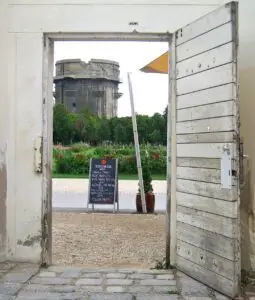 When you turn right at exiting the porcelain manufactory prepare for a bizarre view: Across Augarten’s manicured box trees a massive concrete cylinder sticks up from colorful flower beds. As a matter of fact, two of Vienna’s six air defence towers – aka FLAK Towers – vividly remind of World War II at Augarten. Just a few months before the war ended, in January 1945, the Nazis erected these towers to defend the Reich. To give you an idea of their monstrosity the 45 and 47 meter high landmarked towers boast 2.5 meter thick walls. Because they serve as memorials against war the Viennese municipality decided to keep them. Clashing with manicured gardens, fragile porcelain and Hundertwasser’s blobby waste incineration plant they are hard to overlook. Since both towers are empty and not open to the public you may as well just take in the view.
4. Enjoy Open Air Cinema And City Farm
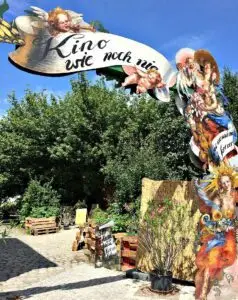 At almost every corner Augarten’s unique neighbourhood flair bursts through. Along the outside wall leading to the main entrance sun flowers, pumpkins, courgettes and runner beans burgeon during the warm months. There, Vienna’s City Farm now enables urban gardening and hosts workshops and rare vegetable tastings for children. On weekend mornings, you will likely see local joggers trotting past the manufactory to circle the World War II Defence Tower on the other side. Between end of June and mid August, Viennese from across town flock to watch vintage films at the Cinema Like Never Before (Kino Wie Noch Nie), and chill out at the pop up cafés nearby. While most movies are in German or with German subtitles you will also find some English language films in the program.
5. Visit Vienna Boys Choir Concert Hall And School
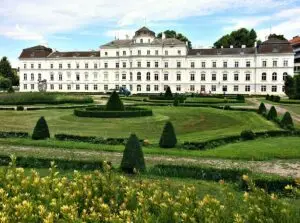 At Augarten Vienna the Vienna Boys Choir runs its boarding school at magnificent Augarten Palace. Although it doesn’t look like, it was designed by the same architect who conceived Schönbrunn Palace: Johann Bernhard Fischer von Erlach. Since the end of World War II the Vienna Boys Choir uses the palace. While the place is closed to the public you can enter the building and hear concerts at its annual Open Day in November. If you aren’t that lucky go and listen to the Choir Boys at their own concert hall at Augarten: Theater MuTh offers superb acoustics and an intimate atmosphere where the audience sits close to the stage, making it a favorite venue for both visitors and artists, with 400 comfortable seats providing excellent sightlines. The concert hall serves as the home performance venue for the world-famous Vienna Boys’ Choir, who perform here regularly on Friday afternoons, showcasing everything from classical repertoire to children’s opera, world music, and pop. Beyond the choir, the venue presents diverse programming including orchestral concerts, big band, jazz, chamber music, electronica, dance performances, stage readings by well-known actors, and contemporary art exhibitions. The striking modern architecture harmoniously integrates a baroque gatehouse and the Augarten wall, with the impressive concert hall created through excavation, featuring warm interior colors and materials that create an inviting atmosphere
How To Get To Vienna’s Augarten
Since Augarten belongs to the central district of Leopoldstadt, it is easy to reach: either take metro U2 to Taborstrasse; alternatively take tramway 31 or bus 5B to Obere Augartenstrasse.
explore more of the finest Baroque Gardens in Vienna
find out other Vienna Sightseeing highlights and insider tips
go to Visit Vienna – 20 Free Vienna Vacation Tools and Tips
visit the main hub page What To Do In Vienna
back to Vienna Unwrapped homepage


